The following is a reflection on the long-term impacts of urban renewal policies in Philadelphia, told through the lived experience of one family and a displaced community.
Stolen Land vs. The Promised Land
by Stephanie James
A Story Beyond One Family – This is all our story. Black land loss is real.
Welcome to the Black Farmers Co-Op (BFC) column series as we present our first essay. This historical passage summarizes the details of “Stolen Land versus The Promised Land,” as told by Pastor Darien Thomas, President and Founder of the Black Farmers Co-Op and a member of the Thomas family. This story features a voice that laid the foundation in many of our own families. This story is about real people. It’s about real lives, real families, real wounds.
It re-lives the pain imposed upon generations by the City of Philadelphia’s Urban Renewal Plan (URP). It was a plan where the city uprooted a self-sustaining community of 8,000 Eastwick residents, including grandmothers, grandfathers and extended family members. This economic impact grew beyond three to four generations and businesses.
This story is not a celebration, but it is newsworthy. It is not recognition, but it is noteworthy. Nor is this a vindication.
Truth be told, this is not just the Thomas story — a story where stolen land, land taken by force by the City of Philadelphia with no compensation, reverberates adversely through the souls of four generations of the Thomas family. This is all our story. america (small “a” intended) has a legacy of taking land. Black land loss is real.
They call it Eminent Domain.
Every family has a story, but this story is all too familiar in america (small “a” intended). In Philadelphia, it is familiar more than 8,000 times over and to more than 8,000 hearts and souls. This is all our history; it unveils abuse of power, apathy and neglect. They call it eminent domain. Yet, this is an effort to unearth the truth.
Lest We Forget
The phrase, “lest we forget” hums a solemn tone when we think of our ancestors, our grands, mothers, fathers, children, elders, loved ones, and all those whose shoulders we stood on.
Our ancestors came before us with far less than humble means, many with only a sheath of covering. Packed on ships, they stood shoulder to shoulder through raging ocean waters. Looking back, many stood on their principles and character. Many stood on their morals. Some even stood facing fear. It was the courage in their souls that sustained them.
Upon reaching their destination in this place called america (small “a” intended), a short sale ensued. Before long, they would sweat in fields before sunup until after sundown — tilling, planting, seeding, and picking.
Generations later, following the star, many made their way north because in the north people believed slavery did not exist. Perhaps in the north, they would find different work, a peaceful life, a small touch of freedom, and an education.
A New System of Control
Little did they know they would be recaptured — recaptured in a new world by a systemic mindset governed by prejudicial plans, policies, and regulations disguised as the URP. (Little did they know this systemic mindset would keep its foot on their necks).
Sold as a bill of goods across the nation, the implementation of the URP was destined to chain their hopes and shackle the dreams and aspirations of generations to come — the very generations later expected to “pull themselves up by their bootstraps.”
Albeit in Philadelphia, there was no field work, no crops to be shared, and no forced labor. But there was stolen land — land governed by federal law, instituted by state policies, and carried out by local officials.
Even today, this URP stolen land plan serves as a reminder to each generation of what this nation has done to people whose skin color shares the same hue as the Thomas family. (Humph — reparations ain’t no joke and black land loss is real.)
For government entities to make something legal, all they had to do was give something a name. In this case, the something was concepts of a plan. It has further proved to be concepts of control referred to as a plan.
Moreover, this something also contained a means to execute the theft of property. This something was titled the Urban Renewal Plan (URP).
Understand eminent domain, authorized theft and giving something a name are all revelations of injustice. Reckoning the spiritual author’s initials as (J.C.) of the URP makes one wonder if those initials stood for Jim Crow. (Humph, the reader can be the judge).
Clearly noteworthy, the execution of “Philadelphia’s URP spanned from the mid-20th century through the 1970s and beyond. It radically reshaped the city’s landscape — often at the expense of its long-standing, predominantly low-income and Black communities. Supposedly, urban renewal was justified as a means to eliminate blight and modernize Philadelphia. But did it?
Urban Renewal in Philadelphia
The URP was backed by state and federal laws like the Federal Housing Act of 1949, which permitted local authorities to use eminent domain to seize private property for redevelopment” (Philadelphia Museums) Urban Renewal-PHMC Pennsylvania Historic Suburbs August 25, 2015). Sanctioned or Systematic? Humph — imagine that: authorized theft of property at this nation’s highest level of government. It almost sounds like sanctioned theft, huh? Or is it abuse of power when a pattern results? Black land loss is real.
The Thomas Family Land
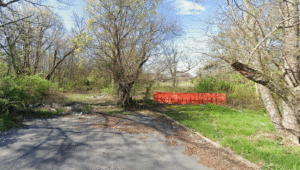
Thomas land is real. Disheartening as it is – located between Pepper Middle School and behind the Wolf Elementary School was Thomas land, address xx25-xx27. Pastor Thomas’ parents purchased the property in1972. City tax records indicate the surviving Mrs. Thomas, family matriarch (the same owner), still receives a bill for xx25-xx27. A gracious gentle senior: she’s soft spoken and carries the legacy of Thomas land in the reflection of her eyes. For decades she lived under the threat of losing her home located at xx25. After all these years she faithfully complies and pays the tax bill in full each year.
What could have resulted in generational wealth for the Thomas family, and seven children has been nothing, but a dream deferred. The problem with taking the Thomas’ property is this -- till this day, the city never redeveloped it. They just took it. They stole it.
Although their justification for taking it was re-development. The development never occurred. The city never broke land or lifted a shovel to dig a hole. The Thomas family who currently own an adjacent parcel is still looking out of their kitchen window waiting for their once stolen land to be re-developed. Mrs. Thomas’ daughter, Shirlene, favors her childhood memory. Before the taking of Thomas land she relives her father maintained a vegetable garden and shared fresh grown vegetables to the community.
As many homeowners did during the execution of the URP, the Thomas family has yet to receive any compensation for their land.
In the Beginning…
Recalling this nightmare, it started when Mrs. Thomas was notified verbally by a neighbor that the city planned to take her xx27 land. Mrs. Thomas never received written notification concerning this taking.
From Story to Voice
During that time, the Thomas family never had the opportunity for due process. Following the next scheduled city meeting which she attended, she found the statement to be true – the city did plan to steal Thomas land upon implementation of the URP. As of March 17, 2026, the stolen Thomas land remains unkept, neglected with no maintenance and Mrs. Thomas must routinely contact the city to maintain, clean and cut the vacant land of overgrown trees, grass and weeds. Stolen land is not only the Thomas story, but today, it is the Thomas voice. The Thomas family voice speaks for the 8,000 plus Philadelphia victims. (It is often said that “They don’t see us”, but the question remains now… “Can you hear us?)
Lest we forget, the Thomas voice is no longer accompanied by a solemn hum. There’s a bit more bass in its voice. Through the turning of generations, there’s no longer a moan from injured hearts resulting in dreams that were not realized.
Not an Error—An Injustice
Oversight of Thomas land was not a simple error. It was not a minor mistake. This was and remains an injustice – an act of theft, weeded into this authorization also were acts of immorality. Yes, once again, this is not just the Thomas story and black land loss is real.
Thousands of families in sustainable neighborhoods were picked like weeds. Families were separated, jobs were lost, children were displaced. (Nobody’s proven to be better at separating families than america. Once again this is all our story).
Looking for data that supports and makes this essay newsworthy? Another one of the most controversial examples of the urban renewal plan was the clearing of what was called the “Black Bottom in West Philadelphia – (ever wonder why it’s called the Black Bottom? Perhaps it’s the governments’ way of further destroying what it deems is decay). City planners worked with institutions like the University of Pennsylvania and Drexel through the West Philadelphia Corporation and labeled the neighborhood blighted and used eminent domain to take homes and businesses—displacing thousands of residents, most of whom were Black. Many received little to no fair compensation or relocation help”, (Philly Voice, University City Townhomes dispute underscores impact of decades long gentrification in West Philly…, March 20, 2022). Some families like the Thomas family received nothing. (Here’s a thought, University of Pennsylvania and Drexel University could have offered scholarships to family members impacted…just thinking out loud…looking for a way to help balance the scales of justice. Investing in one’s’ education or future typically has a substantial return).
A Pattern of Displacement
Ahhh, lest we forget was no longer humming, its volume was intensifying, as once again families were tossed upside down, trauma and homelessness were on the rise. (There seems to be a pattern to the results of a community when the local government steps in to “help”. Better yet, maybe it’s true – they really don’t see us).
What Was Lost?
Other than the Black Bottom in West Philadelphia, “the Eastwick project (of the urban renewal plan) declared vast sections of community land as renewal territory, resulting in the eviction of over 8,000 people and the demolition of many homes—projects that sometimes stalled, leaving vacant lots” (Wikipedia, Eastwick Philadelphia) long after the Thomas family and other residents were forced out. Eastwick was a settled self-sustaining and diverse community. It included, churches, cleaners, cobblers, grocery stores, restaurants and more. The urban renewal plan not only uprooted, but its execution also maintained a lasting adverse impact on the lives of generations to come because families in Eastwick were robbed of their sense of community and the few families who stayed have simply weathered the storms. Families were robbed of their essence of being and belonging to a community. Fathers, mothers, grandmothers, grandfathers, and students lost their sense of home, their sense of connection.
Unanswered Questions
Just how well was the urban renewal plan executed, how well was it managed by the city? It was managed so well that some families who were uprooted have moved on never to be heard from again. It was managed so well that the promise of redevelopment is non-development, weeds, and no maintenance. Could it be that these families were thought not to be noteworthy? Or once again is it that – they don’t see us? Perhaps they don’t see us because we have been cast to live behind the shadows of their crime.
The Lasting Impact
“Critics argue that urban renewal in Philadelphia often meant uprooting established neighborhoods rather than truly serving long-term community needs”, (WHYY, In Philadelphia, a discussion about urban renewal and the “trauma” of eminent domain, April 7, 2016). The ultimate result was that it promoted suffrage. It destroyed american dreams and left enduring social and economic scars on displaced generations.
The City of Philadelphia continues to send a strong long-standing apathetic message to Mrs. Thomas and her surviving family. The voice, Mrs. Thomas’ voice is resounding as she says…
The Promised Land
“Dr. Martin Luther King Jr. described his vision of the promised land – a future society free of racism, poverty, and war, echoing the biblical Moses. He even stated that he might not get there with us, because he knew our collective efforts would lead him to a more just and equitable society. His speech was delivered in 1968.
Lest we forget, my husband and I first rented. We worked hard and were blessed to purchase our property. We bought Thomas land in 1972. We raised seven kids and turned our house into a home. As a family, we built the foundation of our promised land. Thomas land was our home. This is a call to address unfinished business. Address the damage. Where is the public accountability?
Exodus
I declare and I decree what this city needs is a moral revolution, a moral reckoning against self-seeking individualism. We need the promotion of city officials who have sincerity and are committed to the common good. We need city officials who do not have holes in their souls. A self-lined Jim Crow prejudiced, or a divisive mind-set governed in city plans, policies and procedures should not frame the governing efforts.
Correcting the wrongs of the URP is a good place to start because every family deserves its own promised land. Old bones need refreshing, they need restoring -- my vision of the new promised land…
- Reparative Land Justice awaits the new council and the next Philadelphia mayor.
- Develop a paid Land Justice Council (not collateral duties) for the purpose of addressing Urban Renewal and Unresolved Land Displacement in Philadelphia to Repair through Actionable Restorative Policy Language to the satisfaction of the displaced/impacted Eastwick/URP homeowners.
We lived behind the shadows of this city’s act of neglect, abuse of power and implementation of the URP.
Here’s a Revelation, I know I’m going to the mountain top. The question is, “Where are you going? Where is this city going?”.